
Reusable silicone bags have been marketed as the eco-friendly alternative to disposable plastic bags for years. But do they actually save you money? After running the numbers on cost per use, replacement cycles, and real-world durability, the answer is more nuanced than you’d expect. This guide breaks down the true cost comparison between silicone bags and Ziploc-style disposable bags over a 5-year period, plus everything else you need to know before making the switch.
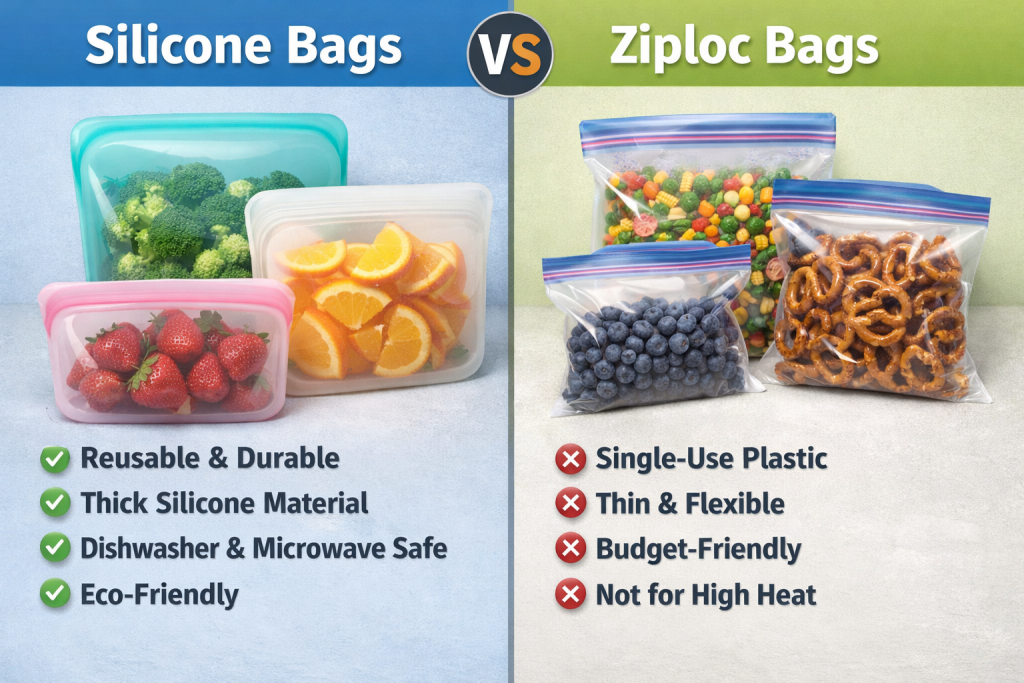
The Real Cost Per Use: 5-Year Breakdown
Let’s start with the numbers that matter most. Most families use plastic storage bags for everything from packed lunches to freezer meal prep. Here’s how the costs actually shake out over five years of normal use.
Average Household Usage Statistics
Based on consumer data, the typical household uses approximately 500-700 disposable plastic bags per year. This includes sandwich bags, snack bags, quart bags, and gallon freezer bags. For our analysis, we’ll use a conservative estimate of 600 bags annually.
| Metric | Value |
|---|---|
| Annual disposable bag usage | 600 bags |
| 5-year disposable bag usage | 3,000 bags |
| Average cost per box (various sizes) | $4.50 |
| Bags per box (average) | 50 |
| Annual cost of disposable bags | $54 |
| 5-year cost of disposable bags | $270 |
Silicone Bag Investment and Replacement Cycle
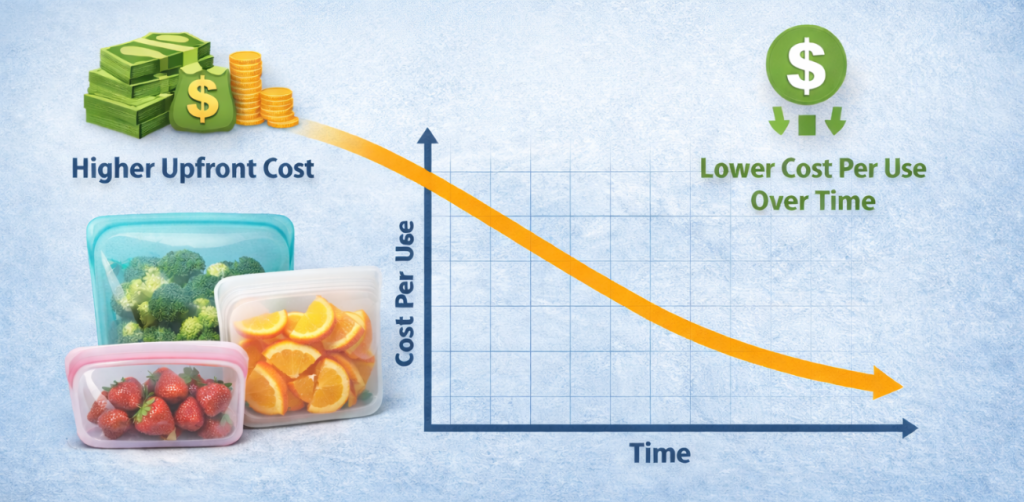
Silicone bags require a higher upfront investment, but the cost-per-use drops dramatically over time. However, they don’t last forever. Based on warranty data and user reports, here’s the realistic replacement cycle:
| Metric | Value |
|---|---|
| Starter set cost (8-10 bags, mixed sizes) | $85-120 |
| Average lifespan per bag | 3-4 years |
| Replacement rate (5 years) | 1.5x initial purchase |
| 5-year silicone bag investment | $128-180 |
| Total uses (5 years, assuming daily rotation) | ~2,500 uses |
| Cost per use | $0.05-0.07 |
Side-by-Side 5-Year Cost Comparison
| Cost Factor | Disposable Ziploc | Silicone Bags |
|---|---|---|
| Year 1 cost | $54 | $100 |
| Year 2 cost | $54 | $0 |
| Year 3 cost | $54 | $30 (replacements) |
| Year 4 cost | $54 | $0 |
| Year 5 cost | $54 | $30 (replacements) |
| 5-Year Total | $270 | $160 |
| Cost per use (5 years) | $0.09 | $0.06 |
| Savings with silicone | — | $110 (41%) |
Bottom line: Silicone bags save approximately $110 over five years for an average household. The break-even point occurs around month 22—after that, you’re saving money with every use.
Environmental Impact: Beyond the Price Tag
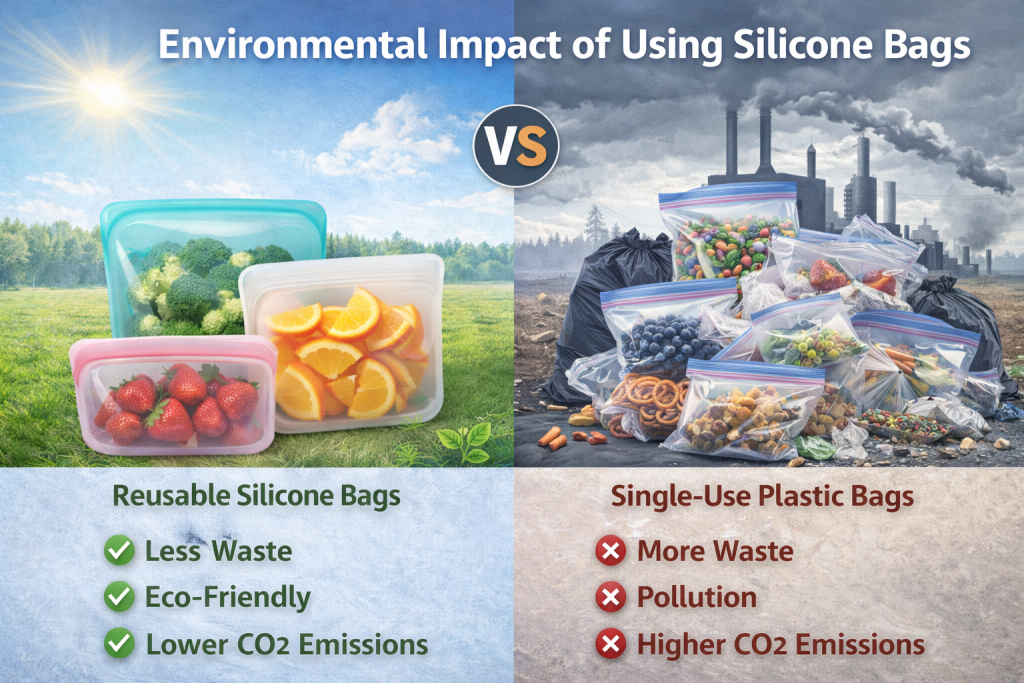
While cost is important, many people switch to silicone bags for environmental reasons. Here’s how the two options compare in terms of ecological footprint.
Disposable Plastic Bags
- Production: Made from polyethylene, a petroleum-based plastic
- Lifespan: Single-use, discarded after one use in most cases
- Recyclability: Technically recyclable (#4 LDPE), but most curbside programs don’t accept them
- Decomposition: 500-1,000 years in landfill
- Microplastics: Break down into microplastics that contaminate soil and water
- 5-year waste: 3,000 bags (approximately 15-20 pounds of plastic)
Silicone Bags
- Production: Made from silica (sand), not petroleum—lower carbon footprint during manufacturing
- Lifespan: 3-5 years with proper care
- Recyclability: Not curbside recyclable, but many brands offer take-back programs
- Decomposition: Does not biodegrade, but is inert and doesn’t leach toxins
- Microplastics: Does not shed microplastics
- 5-year waste: 4-6 bags (approximately 1-2 pounds of silicone)
Environmental winner: Silicone bags produce roughly 90% less waste by weight over five years. However, the silicone manufacturing process does require significant energy, so the environmental benefit increases the longer you use each bag.
Best Silicone Bag Brands: Stasher vs Alternatives
Not all silicone bags are created equal. Here’s how the top brands compare in terms of quality, price, and features.
| Brand | Price Range | Key Features | Pros | Cons |
|---|---|---|---|---|
| Stasher | $10-22 per bag | Premium platinum silicone, patented pinch-loc seal, oven-safe to 400°F | Most durable, best seal, multiple sizes, microwave/dishwasher safe | Highest price point |
| Zip Top | $7-18 per bag | Stand-up design, slide-lock closure, dishwasher safe | Easy to fill/empty, good seal, stands upright | Heavier, takes more storage space |
| (re)zip | $5-12 per bag | PEVA/Plastic-alternative. Lightweight, double-seal closure, BPA-free | Most affordable, good starter option | Less durable, seal can weaken over time |
| Homelux Theory | $15-25 for sets | Bundle pricing, leak-proof, freezer safe | Good value in bulk, color variety | Inconsistent quality between batches |
| Grove Collaborative | $8-16 per bag | Carbon-neutral shipping, take-back program | Environmental commitment, good customer service | Limited size options |
Our recommendation: For households just starting out, the (re)zip starter set offers the best entry point. For long-term investment, Stasher bags justify their premium price with superior durability—most users report 4+ years of daily use before any degradation.
What to Store in Each Type of Bag
Different storage needs call for different solutions. Here’s a practical breakdown of what works best in each bag type.
Best Uses for Silicone Bags
- Daily lunches: Sandwiches, cut vegetables, fruit portions, snacks
- Marinating: Meat, tofu, vegetables—silicone doesn’t absorb odors
- Sous vide cooking: Heat-safe bags work perfectly for sous vide
- Freezer storage: Soups, stews, pre-portioned meals (lay flat to freeze)
- Pantry storage: Bulk items, baking supplies, dried fruit
- Travel: Toiletries, electronics, snacks (TSA-friendly sizes available)
Best Uses for Disposable Bags
- Raw meat storage: Cross-contamination concerns—disposable is safer
- Strong-smelling foods: Garlic, onions, fermented items
- Gift-giving: Baked goods for neighbors, party favors
- One-time transport: Donations, sharing leftovers that won’t return
- Pet waste: Dog walking, litter box cleanup
- Non-food items: Paint supplies, hardware, chemicals
Freezer Safety and Best Practices
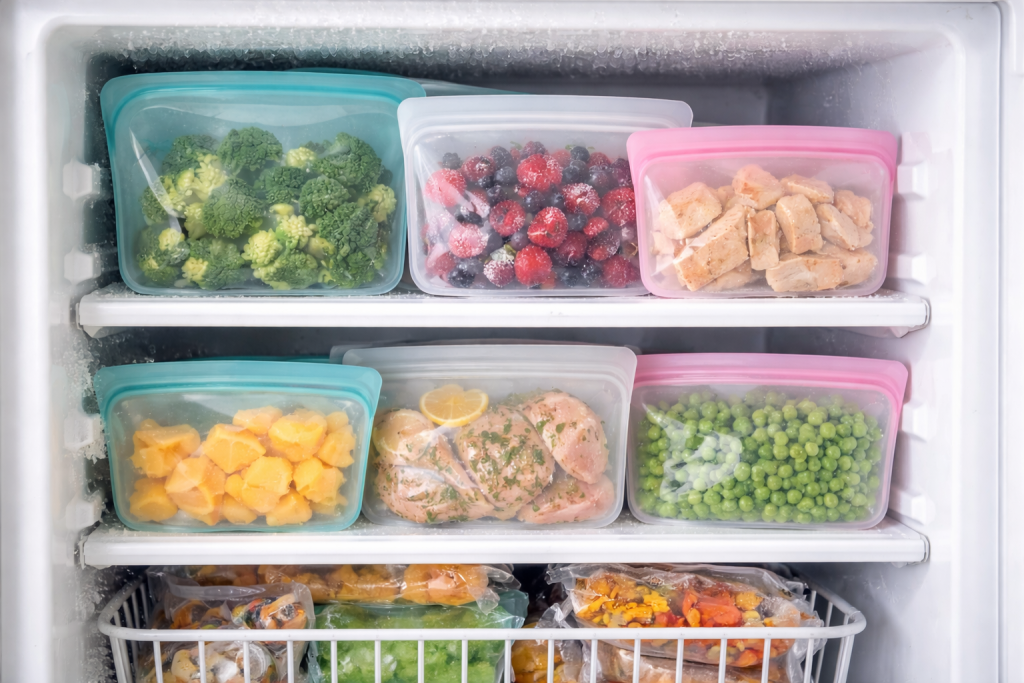
Both bag types work in the freezer, but there are important differences in performance and longevity.
Silicone Bags in the Freezer
Silicone bags are generally freezer-safe, but follow these guidelines:
- Leave 1-2 inches of headspace for liquids to expand
- Lay flat until frozen, then stack vertically
- Avoid freezing very hot items—let cool to room temperature first
- Label with contents and date using masking tape or dry-erase markers
- Most brands rate freezer safety to -40°F
Longevity note: Repeated freezing and thawing can stress silicone seals over time. Bags used primarily for freezer storage may need replacement 6-12 months sooner than bags used at room temperature.
Ziploc Bags in the Freezer
Freezer-specific Ziploc bags are thicker and more puncture-resistant than regular storage bags:
- Use actual freezer bags, not regular storage bags, for long-term freezing
- Squeeze out as much air as possible to prevent freezer burn
- Double-bag items with sharp edges (bones, frozen pasta edges)
- Freezer bags work for 2-3 months of storage; beyond that, quality degrades
Cleaning Methods: Keeping Silicone Bags Fresh
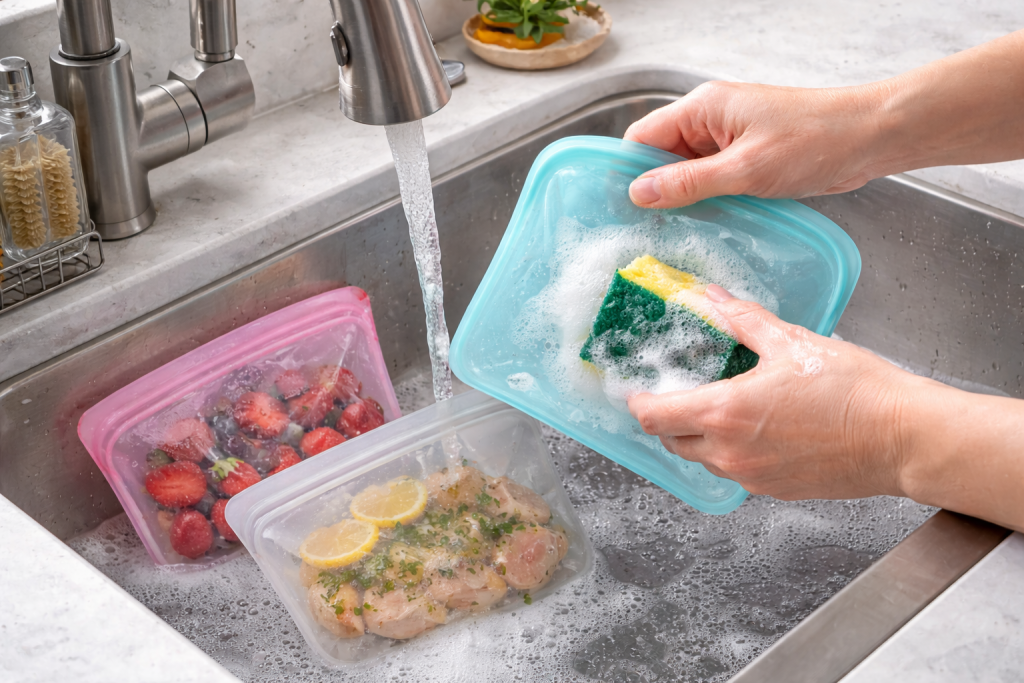
Proper cleaning extends the life of silicone bags and prevents odor buildup. Here are the best methods:
Dishwasher Method
Most silicone bags are dishwasher-safe on the top rack. Pro tip: Invert the bag over a cup or bowl to keep it open during the wash cycle. This prevents the sides from sticking together and ensures thorough cleaning.
Hand Washing
Use warm water and mild dish soap. A bottle brush helps clean corners and the seal track. Avoid abrasive scrubbers that can damage the silicone surface.
Deep Cleaning for Stains and Odors
- Baking soda paste: Mix baking soda with water, scrub interior, let sit 15 minutes, rinse
- Vinegar soak: Fill with white vinegar and water (1:1), soak 30 minutes, wash normally
- Sunlight method: Place open bags in direct sunlight for 2-3 hours to naturally deodorize
- Boiling water: For persistent odors, pour boiling water into the bag, seal, and let cool before washing. Silicone can be boiled for 5 minutes to remove 99.9% of bacteria
Drying Best Practices
Proper drying prevents mold and mildew:
- Prop bags open on a dish rack or bottle drying rack
- Use a clean kitchen towel to wipe the seal track dry
- Store bags completely dry—never seal a damp bag for storage
- Consider a dedicated bag drying rack if you use silicone bags daily
When Disposable Bags Still Make Sense
Despite the cost and environmental advantages of silicone, disposable bags aren’t obsolete. Here are scenarios where Ziploc bags remain the better choice:
Food Safety Concerns
Raw meat, poultry, and fish pose cross-contamination risks. While silicone bags can be thoroughly sanitized, many users prefer disposables for raw proteins—especially when the bag won’t return home (picnics, potlucks, travel).
Strong Odors and Stains
Garlic, curry, kimchi, and heavily spiced foods can leave lasting odors in silicone. While deep cleaning usually works, some users keep a small stash of disposables for these items.
One-Way Sharing
When giving food to neighbors, sending treats to school, or donating to food banks, disposable bags are more practical—you’re not expecting them back.
Non-Food Uses
Paint storage, hardware organization, bathroom trash bags, pet waste cleanup—disposable bags are simply more appropriate for messy, non-food applications.
Backup and Emergency Supply
Keeping a box of disposables for emergencies, unexpected guests, or when all your silicone bags are dirty is a practical strategy even for committed silicone users.
Final Verdict: Should You Switch?
For most households, the math is clear: silicone bags save money after about two years of use and produce significantly less waste. The key is buying quality bags upfront and committing to the cleaning routine.
Switch to silicone if: You pack lunches regularly, meal prep weekly, value environmental impact, and are willing to invest upfront for long-term savings.
Stick with disposables if: You rarely use storage bags, frequently share food one-way, or prioritize convenience over cost savings.
The hybrid approach: Many households find the sweet spot is maintaining a core set of 6-10 silicone bags for daily use while keeping a small supply of disposables for specific scenarios. This gives you 80% of the cost and environmental benefits while retaining flexibility when disposables make sense.
Whatever you choose, understanding the true cost breakdown helps you make an informed decision—not just one based on marketing claims.